Hello, and welcome to my Blog page.
I’ve started adding blogs on how MLS laser therapy and McTimoney Chiropractic is used in combination to treat various conditions in the clinic.
If you have a specific condition and it’s not covered here you’re welcome to give me a call or whatsapp on 07787953569
or you can email me @ moorcarechiropractic@gmail.com and I’ll be happy to talk with you about whether I can help.
A little bit about Laser treatment and how it works.
In essence, Laser therapy works by reducing inflammation and pain while kick starting injured cells and tissues into repairing themselves. Fantastic.
When we’ve had an injury, or we’re in pain for a long time, the cells become ‘stuck in overdrive’ trying to heal themselves but they actually make it worse causing the pain and inflammation to stay.
An analogy would be to think of the cells in your body like tiny batteries. When we’re injured or in pain, these batteries use a lot of energy trying to repair the area; if they haven’t manage to do this in the early days/weeks they start to run low of charge, the healing process slows down, and a chronic condition starts.
Along comes the Laser to act like a fast-charger for the cells, giving them the energy they need to now go about reversing the chronic process and healing the damaged tissues.
If you are having laser for an acute condition i.e something you’ve had for less than 6 weeks, we can stimulate healing straight away.
If you need help with a chronic condition we must initially calm down the area’s inflammation before we can stimulate healing.
Laser treatment is completely painless, and most people just feel a sense of relief as the inflammation goes down and the pain decreases.
Why do I recommend a course of treatments for laser?
If we take the analogy of going to the gym to get fit again, you go once, you might feel good having made a start and your muscles may feel more awake, but you haven’t actually built any muscle yet or effected your cardiovascular health.
To build muscle and cardiovascular strength, you need a consistent gym schedule over
several weeks.
Just like with the laser, one session treats the pain and helps reduce swelling and inflammation, but a full course over several weeks will treat the injury and speed up the healing.
Treatment for a chronic condition would generally look like this:
Visit 1-4: We are calming down the Inflammation. If possible two sessions in the first and second weeks. During this phase it is really important to keep the injured area rested and not to start exercises to strengthen.
Visit 5-7: We are stimulating tissue Repair. Now you can use the area a little but it’s important not to ‘work the injury’ as the new tissues that are forming are fragile and easily re-injured.
Additional sessions if required.
Visit 8-10: We are reinforcing the strength of the new tissues.
It is at this point you can start doing strengthening exercises too that have been suggested by your physiotherapist or myself.
A little bit of the science if you’re interested:
The Laser I use uses two specific wavelengths of light (905nm and 808nm) that work together as a team.
-The first light (905nm) is pulsed and focuses on your pain. It helps block the pain signals
and reduce inflammation immediately. We can adjust this light’s frequency to target different pain types, ie nerve pain, muslce and tendon pain, arthritic pain.
-The second light (808nm) goes deep into the cells to kickstart your body’s natural repair
system. It gives your cells the energy they need to heal themselves much faster than
they could on their own. Studies have shown it can speed up healing times by 30-40%.
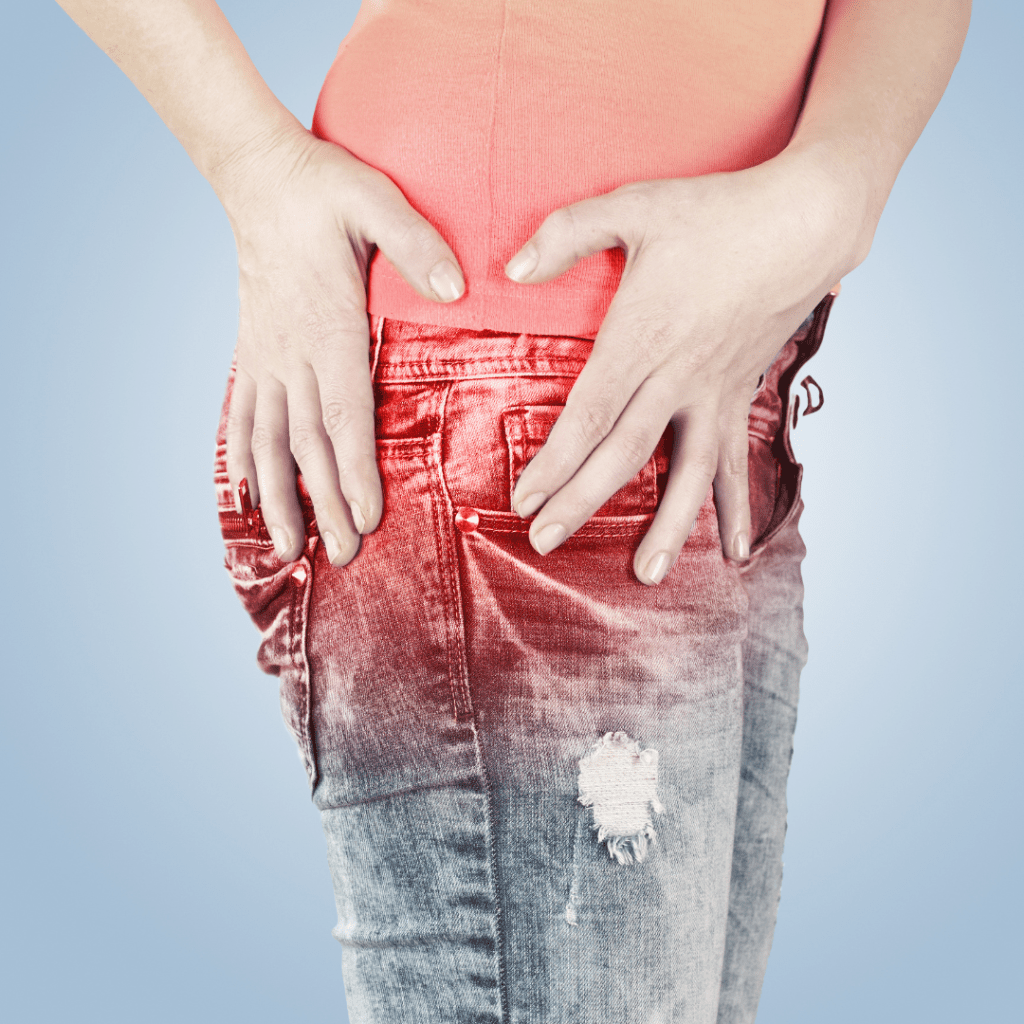
Bursitis of the hip or “trochanteric bursitis” as it was previously called, is now better known as “greater trochanteric pain syndrome” or “GTPS” and is a common condition which presents as pain around the area of the hip bone. Women are 4x more likely to be affected than men and particularly in people between 40-60 years of age.
The name change came about after it was discovered that this pain can also be caused by inflammation of the tendons which insert around the outside of the hip bone. The pain can be caused by repetitive movements of the muscles or compression of the tissues in the area of the hip.
What are the symptoms of GTPS?
Generally, GTPS will present as pain and stiffness around the outside of the hip bone which may get worse after rest or certain activities. You may feel pain when you stand up after sitting, when you climb stairs, cross your legs and stand with your weight on the affected side. The area will also be painful to touch.

What causes hip pain?
There are a number of different causes of GTPS including but not limited to: trauma (eg a fall on your hip), sitting for long periods of time, weakness in the muscles around the hip, a sudden increase in the amount of activity you are doing, crossing your legs while you sit and having lower back pain.
How can I get rid of hip pain?
Greater trochanteric pain syndrome can take a bit of time to get better. You can help yourself by avoiding positions which move your leg across your body or compress the area eg avoid sitting cross legged or with your weight on the affected leg and the hip “popped out”. There are some specific exercises you can do to help strengthen the muscles around the hip – we can create a programe to suit your own specific needs after your assessment. Try to stay active but not so much that it makes the pain worse – move regularly and change position throughout your day.
At MoorCare Chiropractic Clinic we can do a thorough assessment and tailor an individualised treatment plan to help get you better as quickly as possible. We also offer MLS laser therapy, alongside Chiropractic care.
MLS laser is a painless, non-invasive treatment which could reduce your pain and inflammation faster than you may otherwise notice.
If you or someone you know has hip pain you can book an appointment today or contact us for a bit more information on how we can help.
To find out more about our treatments and how we can help you, please contact us at
email: moorcarechiropractic@gmail.com
telephone calls and whatsapp ; 07787953569
Knee Osteoarthritis
Osteoarthritis (OA) is a chronic condition which can affect most of the joints in the body. With activity and age, the surfaces of our joints become damaged and are then repaired by our body’s own healing processes. The cycle of damage and repair can sometimes cause permanent changes in the structure of the joint and the protective cartilage which covers the ends of the bones can become worn down. This can lead to swelling, pain and discomfort when moving the affected joint. Other symptoms might include a feeling of stiffness and a ‘crunching’ sensation on movement of the joint. Symptoms may feel worse in the morning and ease off after a short period of movement and often worsen again by the end of the day.
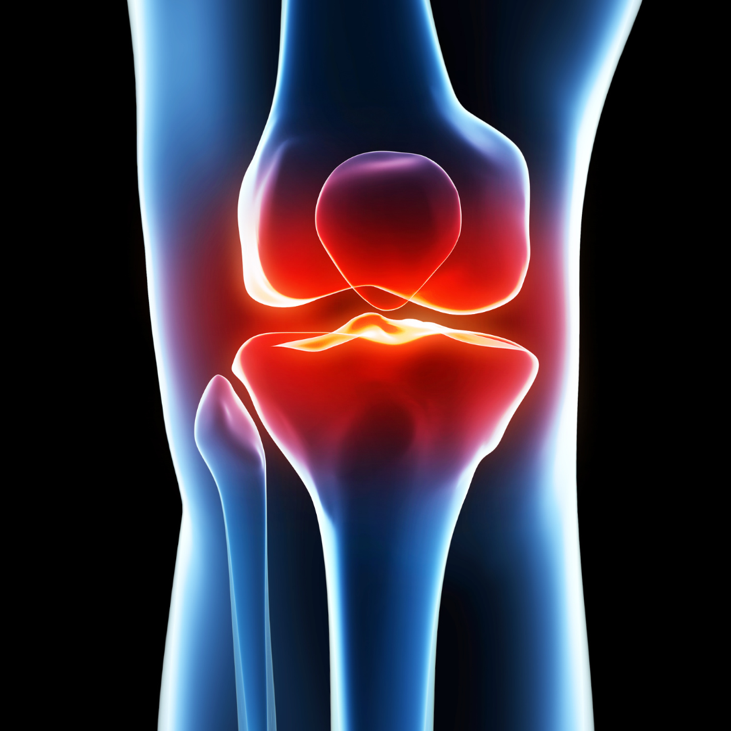
Osteoarthritis of the knee is very common. Anyone can be affected but it is most commonly in females over 50. Other predisposing factors can be previous injury, joint damage resulting from a different condition such as gout; age, a family history of OA, and obesity.
As OA of the knee is a chronic and degenerative condition there is no absolute cure for it however, there are things which can be done to help.
Visiting MoorCare Chiropractic for an assessment will allow the Chiropractor, Kathryn Vickery, to create an appropriate treatment plan to help you. This may include Chiropractic treatment to adjust any imbalances in your skeletal structure; MLS laser therapy to reduce the inflammation, pain and swelling in the knee joint; exercises to strengthen the muscles of the pelvis, legs and feet; and activity modification to help take the strain off of your knees.
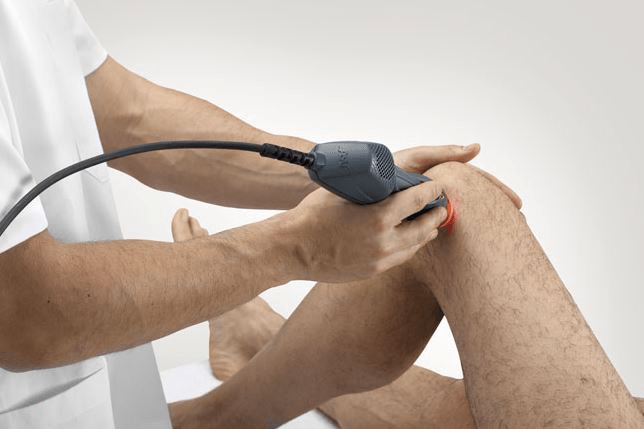
MLSⓇ laser is a painless treatment which can be used to reduce pain, inflammation and swelling in Osteoarthritic joints helping you to feel more comfortable as quickly as possible. By making your movement easier, you can get back to activities sooner and start doing your strengthening exercises to help stabilise your knees. If you are interested in how MLSⓇ laser might help you or someone you know, why not get in touch and we can have a chat.
email: moorcarechiropractic@gmail.com
telephone calls and whatsapp ; 07787953569
Plantar fasciitis

My Heel hurts, what should I do?
Plantar fasciitis is a common problem affecting the bottom of the foot causing. pain near the middle of your heel. It can also extend into the area of the arch of the foot. It can affect just one foot or occasionally both at the same time.
Symptoms often associated with plantar fasciitis are pain upon getting up first thing in the morning causing you to hobble which eases after a few steps. You may also have pain which is triggered when you stand up after a period of rest which again eases after some movement.
A few quick tips to help yourself immediately are:
- Roll a tennis ball under your foot to massage the tense tissues
- Chill a water bottle and roll it under your foot to calm down any inflammation
- Strengthen the muscles in your foot by picking up a pencil or ribbon with your toes
It’s important to know there are many different things which can cause heel pain, it’s therefore important to make sure you know exactly what is causing your heel to hurt before you start any form of treatment plan. We would recommend booking in for a McTimoney Chiropractic assessment with us at MoorCare Chiropractic where we can carry out a full assessment, give you an accurate diagnosis and come up with a treatment plan to get you pain free and back to your usual activities as quickly as possible.
When you come to visit us some of the things we might suggest for your treatment plan might include:
- Orthotics (insoles)
- Taping to support your foot
- Changing your footwear
- Modifying your activities to reduce stress on the sore tissues
- MLS Laser therapy
- Rehab Exercises to strengthen the affected muscles
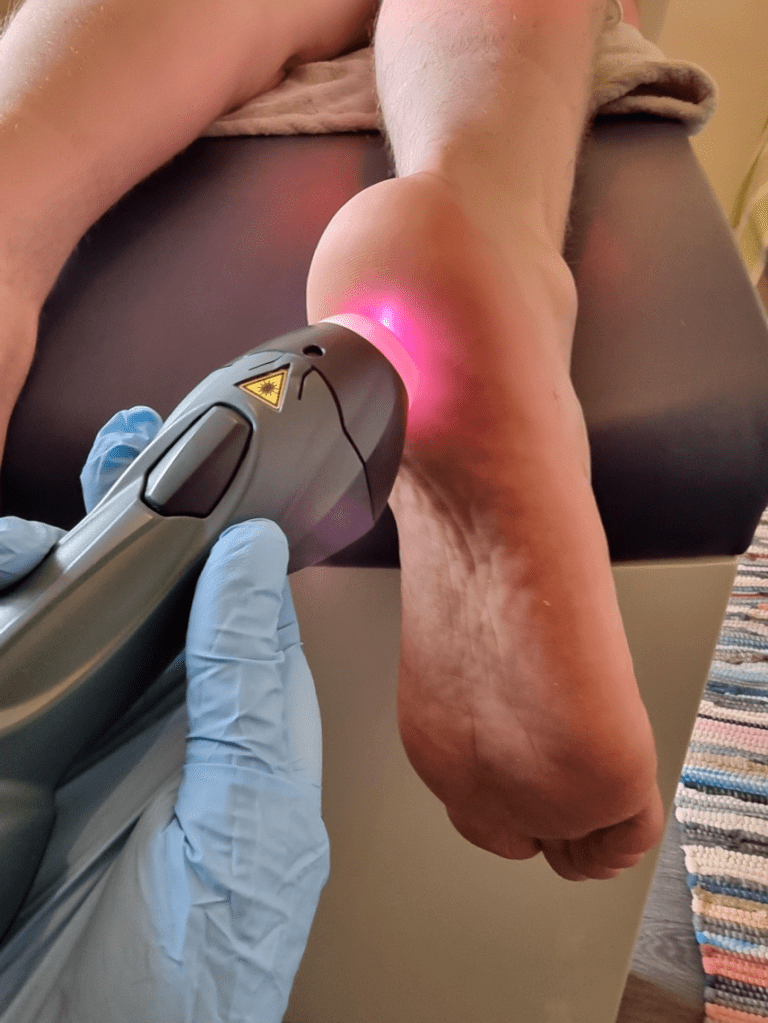
We are delighted to use MLSⓇ laser in our clinic which could quickly help to reduce pain and inflammation associated with plantar fasciitis. Patients love our laser because it’s a totally painless and completely safe treatment. It offers an effective alternative to taking anti-inflammatory medication and more painful or invasive treatment options such as shockwave therapy or steroid injections.
For more information on how we can help you with your heel pain you can contact us at:
Tel: calls and whatsapp 07787953569
Email: moorcarechiropractic@gmail.com
Bursitis
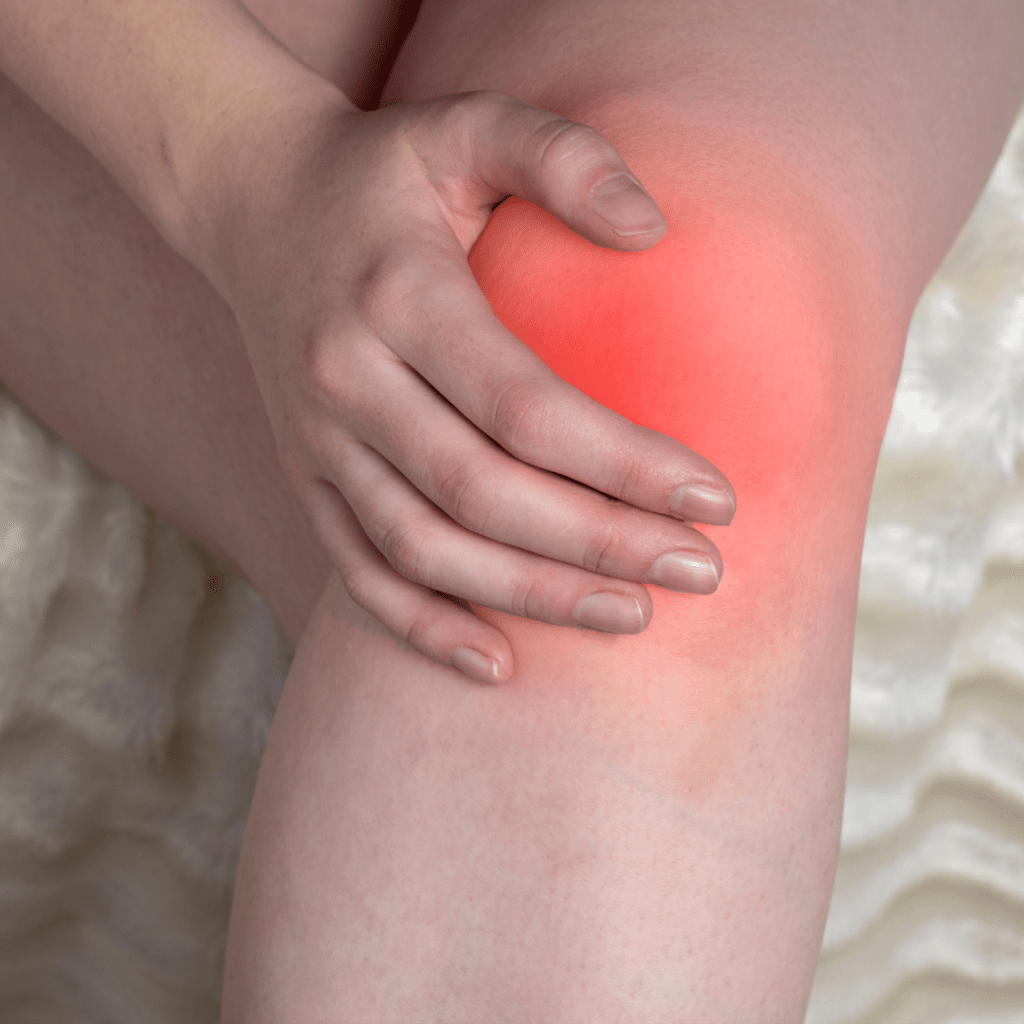
What are bursae?
Bursae are small fluid filled sacs which serve the purpose of cushioning and reducing friction between moving parts of your body, particularly around joints. Sometimes these bursae can become inflamed and painful which is a condition known as ‘bursitis’.
What are the symptoms of bursitis?
Bursitis most commonly affects, the shoulder, knee, the elbow or your hip but can be found in other joints such as the back of the heel and even in your toes. It’s commonly described as dull pain, or an ache which may be painful when the area is pressed as in kneeling, and there may be associated swelling, redness and heat over the area. Movement of the joint can be uncomfortable and may sometimes be worse after rest – the hip in particular may feel worse after sitting or lying on the affected side.
How can I get rid of bursitis?
Bursitis treatment can include the use of ice, anti-inflammatory medication, painkillers or steroid injections. Exercises may be prescribed to strengthen associated muscles. At MoorCare Chiropractic Clinic we can carry out an assessment for you to make sure it really is bursitis which is causing your pain. We offer a range of treatments including a tailored exercise plan and non-invasive, pain free MLS® Laser Therapy. MLS®️ offers a drug free alternative to anti-inflammatories and is applied directly over the inflamed bursa to reduce pain, inflammation and swelling.

To find out more about our treatments and how we can help you, please contact us at
email moorcarechiropractic@gmail.com
telephone calls and whatsapp : 07787953569
 MoorCare McTimoney Chiropractic